Thursday, 25 September 2014
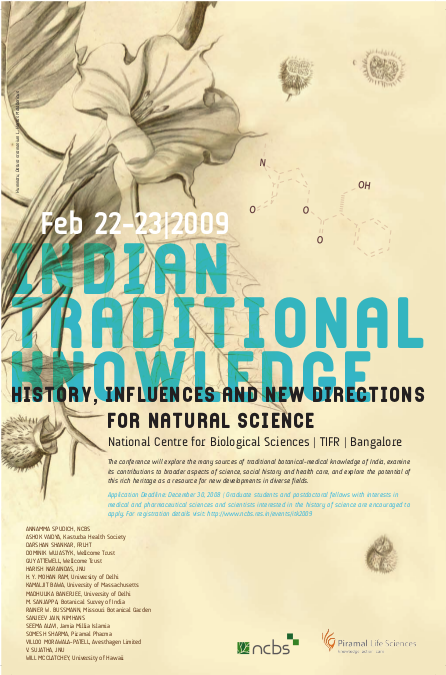
Conference at the NCBS February 22-23, 2009 “INDIAN TRADITIONAL KNOWLEDGE; history, influences and new directions for natural science.”
|
In collaboration with scholars from India and abroad, we hosted an international conference at the NCBS on “Indian Traditional Knowledge; history, influences and new directions for natural science”
in 2009. The conference explored the many sources of Indian traditional
botanical-medical knowledge and the promise and potential of this rich
heritage for new developments in natural sciences, social history and
healthcare. The two-day conference brought together scholars from diverse fields, and provided a venue for exchange of ideas and for possible collaborations. NCBS/TIFR and Piramal Pharma, Mumbai supported the conference. The conference opened with a lecture by Prof. M.S. Valiathan (see the lecture linked by UTube video) and ended with a concluding lecture by Darshan Shankar, FRLHT/I-IAM. During the conference, historians of Indian science, social historians, |
 |
| ecologists/environmentalists
and scientists interested in traditional medicine-based drug discovery
explored the potential and problems related to applications of
traditional medical knowledge to modern challenges. Interestingly, many
of the speakers had never interacted with one another before, and there
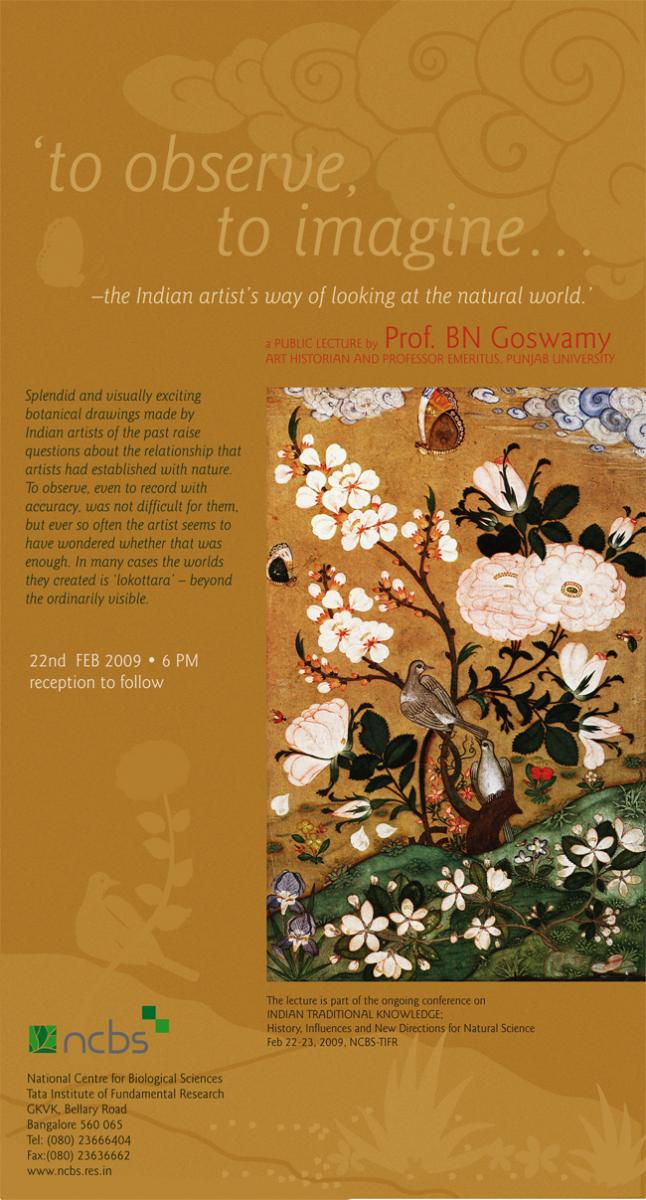
were lively discussions, debates and proposals for collaborations. A public lecture entitled, “TO OBSERVE, TO IMAGINE: The Indian artist’s way of looking at the natural world” by the renowned art historian B.N. Goswamy at the end of the first day of the conference highlighted botanical images in traditional Indian art. (link to poster). In his lecture Prof. Goswamy spoke about the visually exciting Indian botanical drawings of the past, and raised questions about the relationship Indian artists established with nature. In their botanical images Indian artists created worlds beyond the ordinary, that Prof. Goswamy called ‘lokottara.,” worlds of imagination that were many layered and rich with meaning | |
Subscribe to:
Post Comments (Atom)
Popular Posts
-
 TUJIKUMBUSHE YALE MAAJABU SABA YA DUNIA YA MWAKA 2007 Na Alberto sanga endelea...
 -
 habari zilizotufikia,Samaki huyu adimu kabisa duniani kumtia machoni ameonekana amefariki ama amekufa pembeni mwa ufukwe wa baha...
 -
WAGANGA na wakunga wa tiba asili ni miongoni mwa watoa huduma za afya mbadala nchini ambapo wanaongozwa na sheria, mila, desturi na tarati...
-
 WATAALAMU WA TIBA ASILI WAKUTANA CHINI YA JUKWAA MOJA; WAONYESHA UMAHIRI KATIKA TIBA ASILI NA MBADALA Mratibu wa Jukwaa la Tiba Asil...
 -
 FAHAMU KUHUSU TIBA A SILIA YA KUUNGANISHA MIFUPA Watu wengi wanao pata ajali za barabarani na kuvunjika viungo ...
 -
 WASHIRIKI katika Maonyesho ya Biashara ya Kimataifa ya Tiba Asili ya Mwafrika yatakayofanyika Viwanja vya Mnazi Mmoja jijini Dar es Sal...
 -
Archeological and modern genetic evidence suggest that human populations have migrated into the Indian subcontine...
-
 AGOSTI 31 mwaka huu kulikuwa na Maadhimisho ya Siku ya Tiba Asili ya Mwafrika yaliyofanyika Zanzibar katika viwanja vya Bustani ya Vi...
 -
 FAIDA ZA PILIPILI KICHAA KIAFYA NA KITIBA Pilipili kichaa inaweza kustawi sehemu mbalimbali na inahitaji siku 100 za ukuwaji.H...


translate
.png "English")


 Dar+Es+Salaam
My Blog List


0 comments:
Post a Comment